



ORGANS OF PARIS © 2026 Vincent Hildebrandt HOME ALL ORGANS



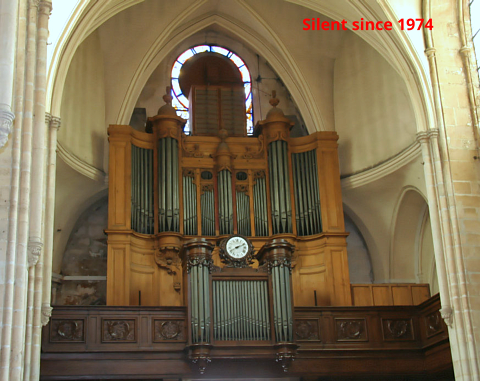
Saint-Leu-Saint-Gilles, right in the heart of Paris, dates
back to the 13th century (1230). It's one of the few
religious buildings from that era, standing along the old
Roman road (rue Saint-Denis) toward Saint-Denis,
Pontoise, and Rouen—later the triumphant route for
royal entries into the capital.
When the Saint-Gilles chapel got too small in the 14th
century, the current Saint-Leu church was built (1310),
hence the double dedication.
Due to the Boulevard de Sébastopol cutting through, the
chancel was shortened by 5 meters and three chapels
demolished mid-19th century. Victor Baltard restored it,
adding side chapels plus a tower and clock (1858). The
nave is Gothic, the chancel Renaissance. Since 1928, it's
been entrusted to the Knights of the Holy Sepulchre of
Jerusalem.

A1
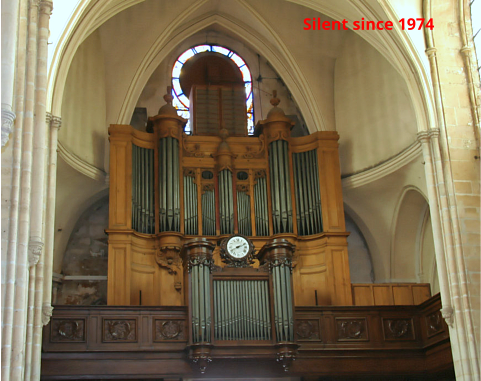
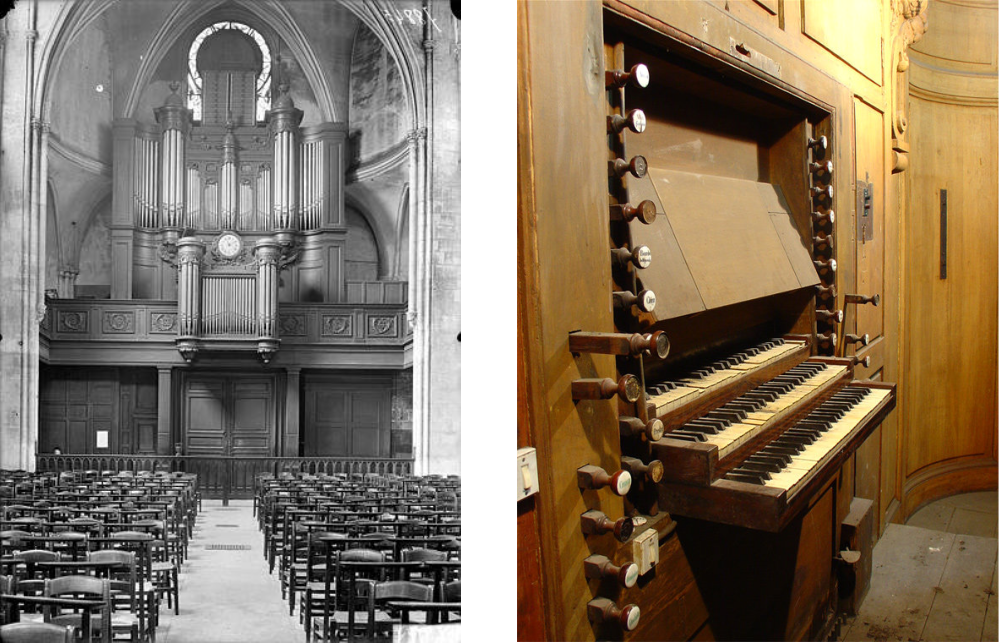
The Saint-Leu-Saint-Gilles organ was built in 1788 by François-
Henri Clicquot. It reused parts of an earlier organ by Guy Jolly
(1658-1659), which had expanded a pre-1603 instrument
modified by Mathieu Langhedul (1603) and Pierre Pescheur
(1619). The central section of the large case survives from
that era. Jolly added the Rückpositiv. At that point, it had 3
manuals, pedal, and 25 stops.
In 1671, Enocq reworked it again—adding a fourth manual,
extending the pedal compass, and changing 10
stops—bringing it to 4 manuals and 28 stops without altering
its core sound.
1788
François-Henri Clicquot left a deep mark on the Saint-Leu-
Saint-Gilles organ. He added concave wings to the great
organ case. Apart from reusing part of the buffet, he likely
replaced all the pipework and action.
1867
Organ builder Suret modified it:
•
Added an expressive manual with 6 stops (but only
speaking on part of the compass).
•
Removed the Récit and Echo manuals.
•
Altered stoplists (e.g., removed 3-4 Positif stops to add
two 8' stops and move the Oboe to the new Récit
expressif).
•
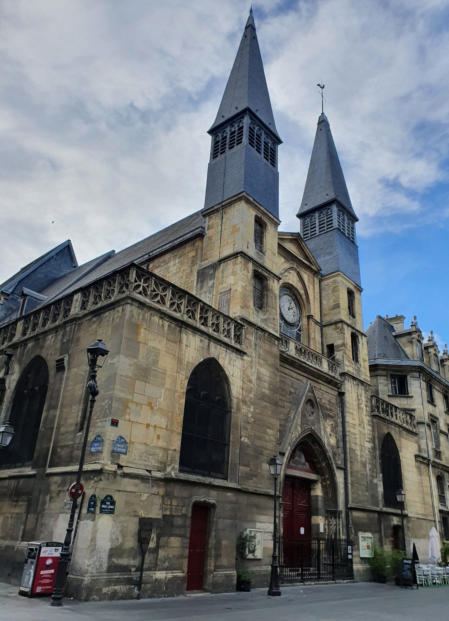
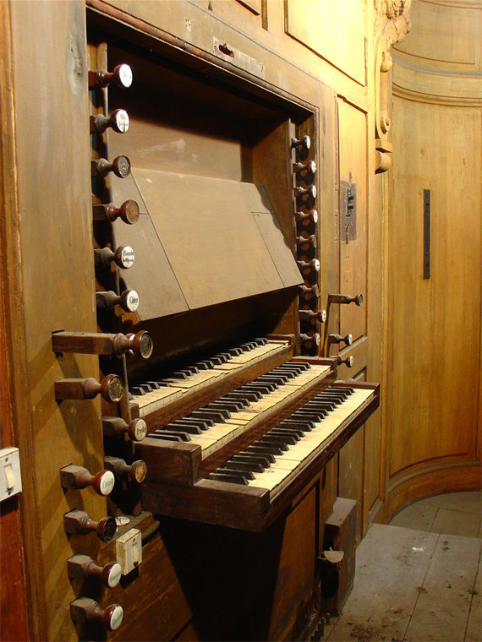
Updated the console keyboards for easier playing.
Still, Suret kept most of Clicquot's action (including sliders)
and much of the original pipework.
1911-1912
•
Mutin worked on it, likely repairing Commune de Paris
damage (some stops lost?) and making adaptations:
•
Installed a large German pedalboard, new pedal couplers,
and combination treadle.
•
Added two new Grand-Orgue stops: acoustic Bassoon 16'
and harmonic Trumpet 8'.
•
Several toeboards remain empty due to 1871 looting.
1920
Béasse made further tweaks in the early 1920s.
Throughout the 20th century, it saw no major work and
slowly deteriorated. On its last legs by 1967, it suffered severe
fire damage in 1974—what flames and heat didn't destroy
was likely ruined by water and extinguishers. Since then, it's
been unplayable.
The organ includes 14 pre-Revolution stops (11 complete, 3
partial), 9-10 by Suret, and 2 by Mutin. Original Clicquot
pipework: 65%.
An association was founded in 2012 to raise funds for a
restoration, which is scheduled for the coming years (set
aside that still 650.000 euros have to be found to finance this
project).
Site of the organ
Brochure

In the plan to maintain the cultural heritage of the City of
Paris, this organ is among the four prestigious and
emblematic instruments, classified as Historic Monuments,
requiring a fundamental restoration.
Restoration issues
The first known interventions of organ builders in Saint-
Leu-Saint-Gilles date back to 1619: the organ builder
Pescheur then modified and enlarged the original organ
but retained its buffet: the instrument was still modest in
size with a keyboard and a pedal ‘en tirasse’. In the mid-
17th century, it is certain that the instrument was no
longer sufficient for the new musical repertoire of the
time and the needs of the liturgy. As early as 1637, the
organ builder Jolly carried the instrument almost to the
dimensions that we know it today by adding a Positive.
In 1659, the organ consisted of 27 stops. In 1671, Enocq
added a fourth keyboard, expanded the scope of the
pedal and changed ten stops, but did not fundamentally
alter the sound characteristics. François-Henri Clicquot's
intervention deeply marks the instrument since most of
the mechanics, more than 60% of the piping and an
important part of the buffet can be attributed to him.
Suret modified the Clicquot organ without distorting it in
1855, among others: the addition of an expressive
keyboard, the consequent removal of the Récit and Echo
keyboards, the modification of the Stoplist of certain
keyboards and the change of the keyboards of the
console...
Mutin intervened in 1911-1912, probably to repair some
damage that occurred during the Paris Commune and
modernize the organ "to the taste of the day", among
others: removal of the French pedal, reharmonization of
the Plein Jeu, addition of harmonic reed stops.
Unfortunately, in 1974, a fire caused extensive damage.
Since then, it has been totally unplayable.
The current condition of the instrument requires a major
restoration: cleaning of the mechanics and piping,
reconstruction of the missing pipes, complete
restoration of the wind chests, repair of the console,
resumption of power and treatment of the buffet. The
preliminary study is to be carried out by a state
consultant technician.
Call to Patronage: 2,280,000 euros, exclusive the costs
associated with the project management are added to this
amount and will be borne by the City of Paris.
Source


1603-1619-1659 - Mathieu Langhedul, Pierre Pescheur et
Guy Jolly (1)
1788 - Clicquot (3)
1855 - Suret (5)
1912 - Mutin (5)
1920 - Béasse (6)
III/25 - mechanical traction
Stoplist
Silent since 1974
Organiste conservateur
François Périllon
Parish website
Video
Video de l’orgue actuel
Photos
Buffet : Jeroen de Haan
Console & Eglise : Vincent Hildebrandt








The organs of Paris


ORGANS OF PARIS © 2026 Vincent Hildebrandt

A1
The Saint-Leu-Saint-Gilles organ was built in 1788 by François-
Henri Clicquot. It reused parts of an earlier organ by Guy Jolly
(1658-1659), which had expanded a pre-1603 instrument
modified by Mathieu Langhedul (1603) and Pierre Pescheur
(1619). The central section of the large case survives from
that era. Jolly added the Rückpositiv. At that point, it had 3
manuals, pedal, and 25 stops.
In 1671, Enocq reworked it again—adding a fourth manual,
extending the pedal compass, and changing 10
stops—bringing it to 4 manuals and 28 stops without altering
its core sound.
1788
François-Henri Clicquot left a deep mark on the Saint-Leu-
Saint-Gilles organ. He added concave wings to the great
organ case. Apart from reusing part of the buffet, he likely
replaced all the pipework and action.
1867
Organ builder Suret modified it:
•
Added an expressive manual with 6 stops (but only
speaking on part of the compass).
•
Removed the Récit and Echo manuals.
•
Altered stoplists (e.g., removed 3-4 Positif stops to add
two 8' stops and move the Oboe to the new Récit
expressif).
•
Updated the console keyboards for easier playing.
Still, Suret kept most of Clicquot's action (including sliders)
and much of the original pipework.
1911-1912
•
Mutin worked on it, likely repairing Commune de Paris
damage (some stops lost?) and making adaptations:
•
Installed a large German pedalboard, new pedal couplers,
and combination treadle.
•
Added two new Grand-Orgue stops: acoustic Bassoon 16'
and harmonic Trumpet 8'.
•
Several toeboards remain empty due to 1871 looting.
1920
Béasse made further tweaks in the early 1920s.
Throughout the 20th century, it saw no major work and
slowly deteriorated. On its last legs by 1967, it suffered severe
fire damage in 1974—what flames and heat didn't destroy
was likely ruined by water and extinguishers. Since then, it's
been unplayable.
The organ includes 14 pre-Revolution stops (11 complete, 3
partial), 9-10 by Suret, and 2 by Mutin. Original Clicquot
pipework: 65%.
An association was founded in 2012 to raise funds for a
restoration, which is scheduled for the coming years (set
aside that still 650.000 euros have to be found to finance this
project).
Site of the organ
Brochure
1603-1619-1659 - Mathieu Langhedul, Pierre Pescheur et
Guy Jolly (1)
1788 - Clicquot (3)
1855 - Suret (5)
1912 - Mutin (5)
1920 - Béasse (6)
III/25 - mechanical traction
Stoplist
Silent since 1974
Organiste conservateur
François Périllon
Parish website
Video
Video de l’orgue actuel
Photos
Buffet : Jeroen de Haan
Console & Eglise : Vincent Hildebrandt